PANEL BUILDS · G+G / G+F / G+F+F · 7″–27″ · 10 POINTS
The panel as a designed surface
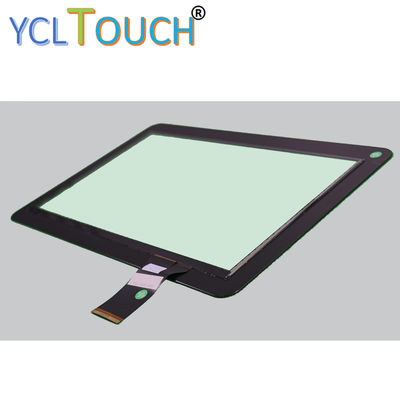
A capacitive touch panel is the touch layer delivered as a finished front surface: sensor, controller and a cover lens — typically tempered glass — that becomes the visible face of your product. Where an infrared frame announces itself with a bezel profile, a PCAP panel disappears: flush glass, printed borders, a logo under the surface. The YCL Touch panel builds cover 7 to 27 inches in G+G, G+F and G+F+F structures. G+G (glass sensor laminated to glass cover) is the rigid, premium build for equipment that will be cleaned, pressed and looked at for a decade; the film-based G+F and G+F+F builds cut weight and cost where the product is portable or price-led. Both share the PCAP electrical pattern: 10 touch points, USB interface, 5V power on the listed models, and response in the 5 ms class on specified panels.
Specification pattern
| Sizes | 7″, 8.4″, 10.1″, 10.4″, 12.1″, 13.3″, 15″, 15.6″, 17″, 18.5″, 19″, 19.5″, 21.5″, 23.6″, 24″, 27″ |
|---|---|
| Structures | G+G, G+F, G+F+F |
| Cover glass | Tempered options to 6H hardness; black silk-screen printing on industrial models |
| Controllers | EETI / ILITEK on specified 21.5″ model; family-standard controllers elsewhere |
| Touch points | 10 |
| Interface / power | USB; 5V on listed models |
| Minimum order | 1 piece on most panel listings |
Specifying a panel build
Three decisions define a panel order. Structure: G+G for fixed equipment and public-facing fronts; film builds for handheld or cost-sensitive products. Cover glass: thickness, edge finish, and the silk-screen print — border colour, logo, icon legends — which is a listed capability on the industrial models and the single most effective branding move available on a touch product. Controller behaviour: glove mode, water tolerance and noise immunity are firmware behaviours, not glass properties; if your environment has any of the three, declare it in the inquiry so the panel is tuned before it ships, not debugged after. Panels integrate with the displays and housings in the PCAP family; complete product context, including overlay-kit format PCAP for retrofit work, is compared in the IR vs PCAP guide.
Panel vs overlay, in one paragraph
Buy the panel when the touch surface is part of a product you manufacture — the panel arrives as a component of your front assembly. Buy an infrared overlay when a finished display already exists and needs touch added. Confusing the two is the most expensive specification error in this catalogue, and it is entirely avoidable at inquiry stage: tell us what already exists, and the quotation will be built on the right artefact.
A note on evidence
Every figure on this page traces to the manufacturer's own catalogue listings for this model class — dimensions, touch points, interface and stated standards are quoted from those listings, and anything the listings leave open (certification documents for a specific build, confirmed lead time for a specific quantity) is confirmed at quotation rather than filled in here. That discipline is deliberate: a specification page that invents nothing is the only kind worth engineering against, and it is why the inquiry asks for your display model — so the reply can be written against your unit, with the drawing, instead of against a generic diagonal.
Can panels be supplied with our printed artwork?
Yes — silk-screen printing is a listed option on the industrial panel models. Send vector artwork with the inquiry.
What cover-glass thickness should I choose?
It follows the product's abuse profile: handheld and desktop products sit at the thin end; public and industrial fronts at the thick end. Declare the environment and we specify against it.